How to make your own cookbook, step by step
Most households already own a cookbook — it is just scattered across a recipe tin, three note apps, a few screenshots and someone's memory. Making your own cookbook is mostly the work of collecting that, writing it in a consistent shape, and testing it. Here is a method that gets it done without turning into a year-long project.
By Your Recipe · Updated 21 August 2026
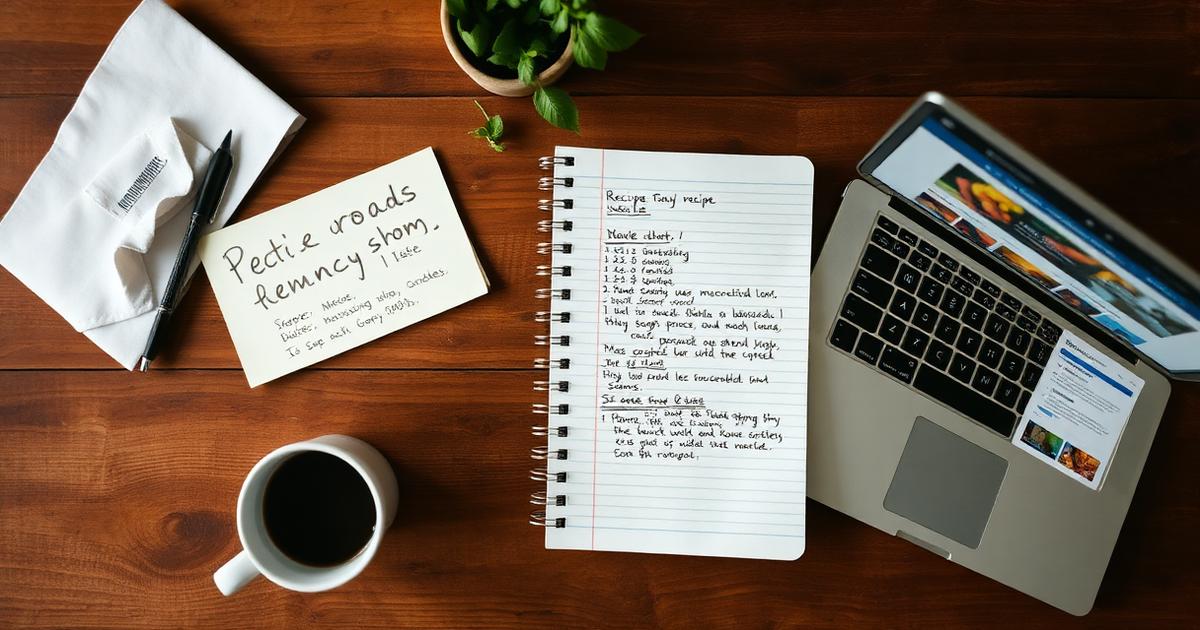
Why paper recipes disappear
Handwritten cards were written by someone who already knew the recipe, so they leave out the obvious: the pan, the temperature, the point where you should stop stirring. They also exist in exactly one copy. Digitising is not only about backup — it is the moment you fill in what was never written down, while the person who knows can still tell you.
The seven steps
- 1
Decide what the book is for
A cookbook with a purpose gets finished. Pick one scope to start: the family classics nobody has written down, your weeknight rotation, or your baking. Anything outside that scope goes on a list for later.
- 2
Gather the recipes in one place
Collect the paper cards, the phone notes, the screenshots and the messages. Photograph handwritten cards flat and in daylight; paste typed notes straight in as text. At this stage do not tidy anything — just get everything into one pile so you can see the size of the job.
- 3
Write each recipe so it stays usable
Give every recipe a title, a portion count, an ingredient list and numbered steps. Split ingredients into groups when a recipe has parts — marinade, dough, sauce — so you are not hunting through one long list mid-cook. Put quantities in the ingredient list and technique in the steps, never both.
- 4
Build a category system you will actually use
Categories should match the question you ask at 6pm: what can I cook tonight? Weeknight, weekend, baking, batch cook, guests, sweet. Keep the list short — under ten — and name recipes plainly ('Mum's lemon cake', not 'Cake II').
- 5
Cook it, then fix it
A recipe is only finished after someone else could follow it. Cook from your own written version, note where you hesitated, and correct it the same evening: the pan size you actually used, the real oven temperature, the step where the timing was wrong. Save the corrected version rather than editing over it if you might want the original back.
- 6
Add photos where they help
One finished photo makes a recipe findable at a glance. Photos on individual steps matter more: the colour of a properly caramelised onion, the texture of a dough that is ready. Take them while you cook — you will not recreate them later.
- 7
Decide what is private, and back it up
Some recipes are family property and should stay private; others you will want to send to a sibling. Keep the default private and share deliberately. Then export the whole book as a single PDF so there is a copy that does not depend on one phone — print it, bind it, or keep it in cloud storage.
A recipe template that works
Keeping the same shape for every recipe is what turns a folder of notes into a book.
- Title and one line of context — where it came from, or when you cook it.
- Portions, prep time, cook time — so you can judge it before you start.
- Ingredients, grouped by part — weights where accuracy matters, especially in baking.
- Numbered steps — one action per step, with a doneness cue ("until the edges pull away"), not just a time.
- Notes — substitutions that worked, what to do differently next time.
Keep it going
A cookbook stays alive if adding to it costs a minute. Write the recipe down the evening you cook something worth repeating, rather than saving links you will never reopen. Once a season, reread the book and delete what you never cooked — a shorter book gets used more.
Questions people ask
How many recipes should a personal cookbook have?
Fewer than you think. Thirty to fifty recipes you genuinely cook is more useful than three hundred you saved and forgot. Start with what you cooked in the last two months.
What is the fastest way to digitise handwritten recipes?
Photograph the card in good light, flat and square on, then transcribe it. Tools that read a photo of a recipe get you most of the way, but always check the quantities against the original before saving.
How should I organise categories?
Use categories that match how you decide what to cook — weeknight, baking, batch cooking, guests — rather than formal cuisine labels. Keep the list under about ten.
Should I write down grandma's recipe exactly as she said it?
Record it verbatim first, including phrases like 'a handful' or 'until it looks right'. Then add a second line with your own measured version once you have cooked it and weighed things.
How do I back up or print my cookbook?
Keep it somewhere that is not one phone. In Your Recipe you can export every recipe into a single PDF, which you can print, bind or store as an offline copy.
Build yours here
Your Recipe gives you grouped ingredients, step photos, private-by-default recipes and a one-file PDF export of the whole book. You can turn a photo or a pasted note into a structured recipe instead of typing it out.